
 Chuck Matthews
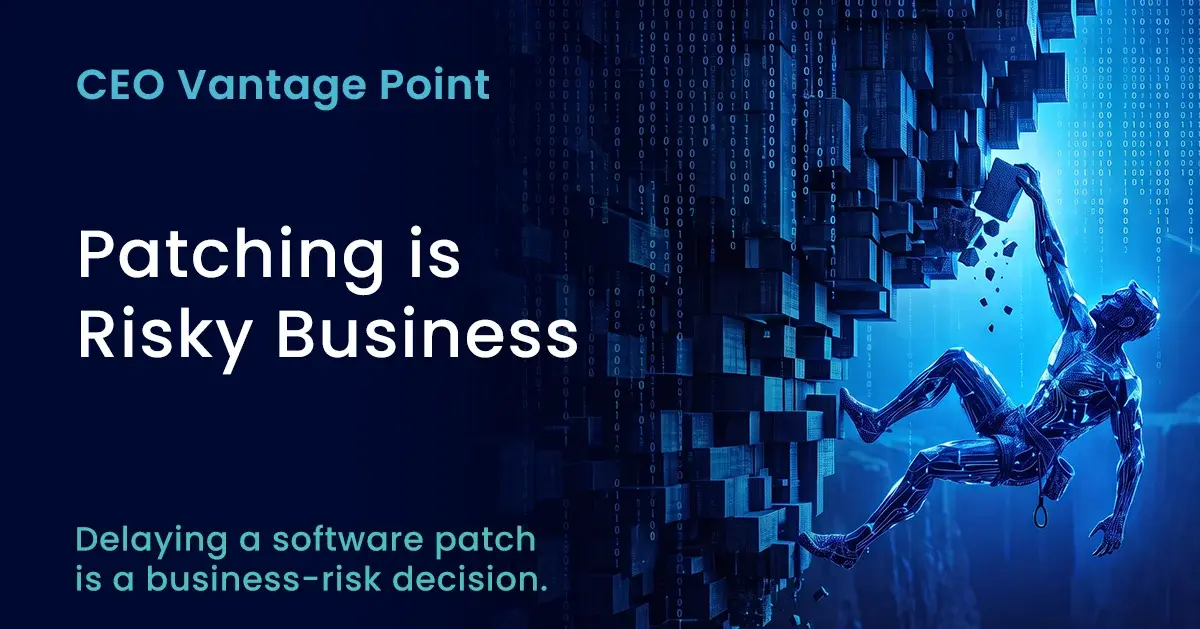
Patching closes the door on known vulnerabilities, but it does not tell you whether an attacker has already walked through it.
Software Patching 101
A patch closes a known vulnerability. But it cannot tell you whether attackers have already exploited it. For business executives, that distinction is important. It’s the difference between “remediation” and “business risk”.
When are we “at risk”?
When exploit details go public, they can trigger numerous cyberattack attempts within minutes. For organizations, standard patch testing and operational constraints can delay immediate fixes.
Knowing which assets are exposed is the first step. Preserving their inbound and outbound communications before, during, and after remediation helps investigators distinguish normal activity from an intrusion or exfiltration. Visibility into this network data is essential for assessing potential exposure and business risk.
How long have we been exposed?
The recent PHP2Shell disclosure shows why history matters. After its October 21, 2026 disclosure, Cloudflare CEO Matthew Prince reported tens of thousands of exploitation attempts within 45 minutes, with thousands in the preceding 10 hours. The Register reported that Amazon had detected an attempt as early as October 17. These were attempts, not confirmed compromises. This means Public Disclosure does not mark the beginning of an organization’s threat exposure.
Who owns the risk while the fix waits?
Executives do not need to run the patch calendar. They need to know who owns the risk while a fix waits, which business operations are exposed, and what supports the decision to defer remediation. Routine maintenance windows cannot govern emergency response. Technical teams must prioritize fixes and test deployment; leadership must ensure that exceptions have accountable owners, compensating controls, and review dates. A delayed patch is a business-risk decision, not simply an unfinished IT task.
AI threats leave less time for decisions.
AI accelerates vulnerability response on both sides. Defenders use it to review code and prioritize vulnerabilities; attackers use AI to analyze disclosures, generate exploit variations, and automate reconnaissance. For executives, the result is a shorter decision window—not greater assurance. Evidence and expert review remain essential to determine whether suspicious activity represents compromise.
The workload is substantial: CrowdStrike reported that Microsoft’s October 2026 release addressed 1,413 vulnerabilities—not 1,413 separate patches every organization must deploy. For comparison, they reported only 59 vulnerabilities addressed in Microsoft’s February 2026 release, making October’s reported total nearly 24 times as large. Teams must identify relevant fixes and prioritize affected assets while monitoring systems awaiting remediation.
You can’t govern exposure you can’t see.
Asset awareness connects technical exposure to business operations. Shadow IT, version mismatches, plugins, and configuration changes make periodic inventories insufficient. Continuous discovery, clear ownership, and visibility into software versions and exposed services help teams identify affected systems and reconcile them with authorized assets. Executives need to know which critical operations depend on those systems. An inventory identifies what needs protection; communication records reveal how those assets interact. A patch-completion percentage cannot answer both questions.
GRC teams, different roles.
Governance asks who can accept risk and when that decision must be revisited. Risk Management asks which operations could be disrupted and what protection remains while remediation waits. Compliance asks what obligations apply and what records support the response. Patch records document remediation; retained network history supports investigation of earlier exposure. Neither is a substitute for the other, and network evidence alone does not certify compliance or guarantee that every relevant event was captured.
Build the evidence layer before you need it
Build investigation readiness into business operations before an incident—not after a disclosure forces urgent decisions.
Suppose an internet-facing server needs a patch that must wait for testing. Leadership must decide whether operations can continue and what might require containment. Investigators need to look back: did the server receive suspicious connections before disclosure, then contact unfamiliar external destinations or other internal systems? Retained traffic, compared with normal activity, provides a starting point for assessing scope and potential business impact. Installing the patch addresses the vulnerability; investigating earlier exposure informs the response.
PacketWatch’s Managed WireSight™ service pairs WireSight’s full-packet network visibility with Team Sixty43 expertise. WireSight preserves network activity across managed and unmanaged systems; our experts use that evidence to investigate suspicious connections, SMB activity, lateral movement, and potential exfiltration. They validate findings and work with clients and integrated endpoint controls to contain malicious behavior. This adds evidence and expert interpretation alongside patching and endpoint protection—not a replacement for either. For executives, the benefit is a stronger factual basis for deciding what happened, what may be affected, and what response is justified.
See what WireSight provides GRC, Audit, Cyber, and IT Teams. (View PDF)
Conclusions
The leadership test is simple: if an exposed system were exploited today, could your team:
-
Reconstruct what happened?
-
Decide what to contain?
-
Explain the risk accepted?
Know your assets, assign ownership to deferred fixes, and preserve the network history needed before, during, and after disclosure. Patching is essential. So is the evidence to make informed business decisions when prevention is not enough.
WireSight in Your Environment
If you want to see what's already crept onto your network, Contact Us and request a complimentary 30-day Proof of Value implementation of Managed WireSight. If your organization qualifies, you'll have a dedicated cybersecurity expert and weekly calls explaining what we found, along with our remediation recommendations. If you aren't network threat hunting today, these 30 days will be enlightening.
Chuck Matthews is the CEO of PacketWatch, where he provides strategic leadership for the organization known for its proprietary full-packet-capture platform, advanced threat-hunting capabilities, and rapid incident-response teams. Under his leadership, PacketWatch enables enterprises to achieve deeper network visibility, accelerate investigations, and strengthen operational resilience. Matthews is a respected voice on cyber readiness as board chair of SecureAZ, a passionate advocate for packet-level forensics, and the importance of watching the wire.
Posts by Tag
- CEO Perspective (36)
- Cybersecurity Resilience (12)
- Incident Response (12)
- Compliance (10)
- GRC (10)
- Artificial Intelligence (AI) (8)
- Best Practices (8)
- Vulnerability Management (7)
- Network Visibility (6)
- Threat Hunting (6)
- Cyber Insurance (4)
- Full Packet Capture (4)
- HIPAA (3)
- Network Security Monitoring (3)
- Source of Truth (3)
- Artificial Intelligence (2)
- Cyber Risk (2)
- Endpoint Security (2)
- Ransomware (2)
- Critical Vulnerability (1)
- Cybersecurity Threats (1)
- Event (1)
- Legal Industry (1)
- Manufacturing Industry (1)
- Multi-factor Authentication (1)
- Security Risk Assessment (1)
- Shadow AI (1)
- Threat Intel (1)
- Zero-Day (1)